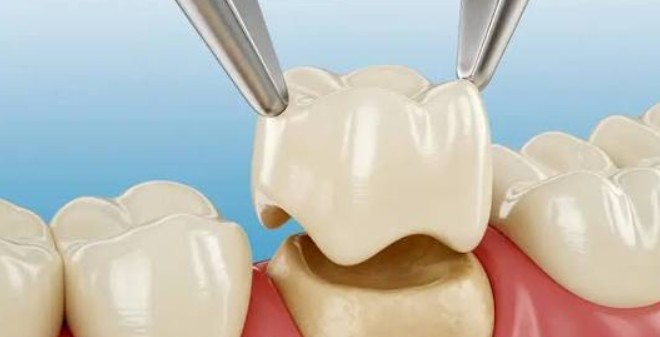
When a tooth has been significantly weakened by decay, a large filling, trauma or extensive wear, a dental crown can help restore its strength, function and appearance. Unlike a filling, which repairs a smaller area of damage, a crown covers the tooth more extensively to provide additional protection.
Dental crowns are commonly used when there is not enough healthy tooth structure remaining for a conventional filling to provide reliable long-term support. They can also be used to restore teeth that have undergone root canal treatment or to improve the appearance of severely discoloured or misshapen teeth.
At Oatlands Dental Lounge, we provide comprehensive dental services designed to restore and protect natural teeth wherever possible. If you have a damaged or weakened tooth, a dental assessment can determine whether a crown is appropriate or whether a more conservative treatment could be sufficient.
This guide explains how dental crowns protect damaged teeth, when they are recommended and what you can expect from the treatment process.
A dental crown is a custom-made restoration that fits over the visible portion of a damaged tooth.
It is designed to restore the tooth’s:
Once securely fitted, the crown acts like a protective covering around the remaining tooth structure.
Crowns can be made from different materials, including ceramic, porcelain-based materials and other strong dental materials. Your dentist will recommend an appropriate option based on the position of the tooth, its condition, your bite and your aesthetic requirements.
A severely damaged tooth may have less natural structure available to withstand normal biting forces. This can increase the risk of further cracking, fracture or breakdown.
A crown helps protect the remaining tooth by covering and reinforcing the weakened structure.
When a tooth has lost a significant amount of enamel or dentine, ordinary chewing forces can place additional stress on the remaining structure.
A well-fitted crown distributes biting forces across the restored tooth, helping reduce the likelihood of further damage.
Crowns can provide structural support when a tooth has been extensively weakened by decay, large fillings or trauma.
The aim is to preserve as much healthy natural tooth structure as possible while restoring the tooth’s ability to function normally.
Teeth that have undergone root canal treatment can sometimes require additional protection because a substantial amount of tooth structure may already have been lost.
Once the root canal treatment has been completed and the tooth has been assessed, a crown may be recommended to help protect the remaining tooth from fracture.
Our private root canal services can help preserve natural teeth affected by infection where the tooth is suitable for treatment.
Crowns are not required for every damaged tooth. They are generally considered when a tooth has sustained enough damage that a filling or other conservative restoration may not provide adequate protection.
Your dentist may recommend a crown in situations such as the following.
Large areas of tooth decay can leave insufficient healthy tooth structure to support a conventional filling.
After removing the decay, a crown may be used to restore and protect the remaining tooth.
Treating decay early can sometimes prevent the need for more extensive restorative treatment, which is why regular dental examinations and hygiene appointments are important.
A tooth with a very large filling may become weakened over time, particularly when there is relatively little natural tooth structure remaining.
If the filling has failed or the surrounding tooth has become compromised, replacing it with a crown may provide greater structural protection.
A cracked tooth may become increasingly vulnerable to further fracture when exposed to repeated chewing forces.
Depending on the location and severity of the crack, a crown may help hold the remaining tooth structure together and reduce the risk of further breakdown.
However, not every cracked tooth can be saved with a crown. Your dentist will need to assess the extent of the damage before recommending treatment.
Root canal treatment removes infected or inflamed tissue from inside the tooth and allows the natural tooth to be retained.
Afterwards, the tooth may require additional structural protection. A crown is often considered for teeth that have lost substantial structure, particularly back teeth that experience significant chewing forces.
Teeth can become worn as a result of grinding, clenching, acidic erosion or other factors.
Where significant tooth structure has been lost, crowns may form part of a wider restorative treatment plan to rebuild the shape and function of the affected teeth.
If you regularly grind or clench your teeth, your dentist will need to consider the underlying cause before carrying out extensive restorative treatment.
Accidents, falls and sporting injuries can cause teeth to chip, crack or fracture.
If a significant amount of tooth structure has been lost but the natural tooth can still be preserved, a crown may be considered to restore its function and appearance.
Although crowns are primarily used to restore and protect damaged teeth, they can also improve the appearance of individual teeth.
A crown can alter the shape, colour and overall appearance of a tooth where appropriate. However, cosmetic treatments should always be based on a thorough assessment of the tooth’s health and structure.
Both fillings and crowns can restore damaged teeth, but they are used in different circumstances.
A filling repairs a specific area of a tooth after decay or minor damage has been removed. A crown covers a much larger portion of the visible tooth and is generally considered when the remaining structure needs greater protection.
If a tooth has only a small cavity, a filling may be sufficient. If a large portion of the tooth has been lost, a crown may provide a more suitable long-term restoration.
Your dentist will always aim to use the most conservative treatment that can adequately restore and protect the tooth.
The exact process depends on the condition of your tooth and the type of crown being used, but treatment generally involves several stages.
Your dentist will examine the affected tooth and surrounding tissues.
X-rays may be recommended where appropriate to assess the tooth roots, bone and structures that cannot be seen during a routine examination.
We will discuss your symptoms, treatment goals and available options.
If the tooth is infected, this may need to be treated before the crown is placed. In some cases, root canal treatment may be necessary to preserve the tooth.
A small amount of tooth structure is carefully removed to create space for the crown.
The amount of preparation depends on the tooth and the type of restoration being used.
Digital scanning technology may be used to capture detailed information about your teeth.
This helps the dental laboratory create a crown that fits accurately and complements the surrounding teeth.
Once your permanent crown has been created, it is carefully fitted and bonded or cemented into position.
Your dentist will check the fit, appearance and bite to ensure the restoration functions comfortably.
The lifespan of a dental crown varies depending on factors such as the material used, the condition of the underlying tooth, your bite and your oral hygiene.
Good dental care can help maximise the lifespan of your crown.
You should continue brushing twice a day with fluoride toothpaste, clean carefully between your teeth and attend regular dental examinations.
It is also important to avoid using your teeth to bite extremely hard objects, as this can damage both natural teeth and dental restorations.
In many cases, yes.
One of the key benefits of a dental crown is that it can allow a significantly weakened tooth to remain in the mouth rather than requiring extraction.
However, the tooth must have enough healthy structure and adequate support for a crown to be successful.
If a tooth is too badly fractured, has extensive infection or lacks sufficient supporting structure, other treatment options may need to be considered.
Your dentist will assess the tooth carefully before recommending a crown.
Sometimes a tooth is too severely damaged or infected to restore successfully.
If extraction becomes necessary, there are several options for replacing the missing tooth. Depending on your individual circumstances, these may include a dental bridge, denture or dental implant.
Dental implants can provide a fixed replacement for missing teeth and may help restore both function and appearance where clinically appropriate.
Once your crown has been fitted, looking after it is similar to caring for your natural teeth.
We recommend:
Although the crown itself cannot develop tooth decay, the natural tooth underneath and around its edges remains vulnerable to plaque and decay.
Good oral hygiene is therefore essential for protecting both the restoration and the remaining natural tooth.
At Oatlands Dental Lounge, our approach to restorative dentistry focuses on preserving natural teeth wherever possible.
We assess the underlying cause of tooth damage before recommending treatment and consider whether a filling, crown, root canal treatment or another restoration is most appropriate.
Using modern diagnostic and digital techniques, we aim to provide comfortable, carefully planned treatment that restores both function and appearance.
Whether you have a cracked tooth, extensive decay, a failing filling or a tooth that has recently undergone root canal treatment, we can help you understand your options.
If you are concerned about a damaged or weakened tooth, arrange a consultation to find out whether a dental crown could help protect and restore it.
Q: Why does a damaged tooth need a crown?
A: A crown can protect a significantly weakened tooth from further damage while restoring its shape, strength and function.
Q: Does every damaged tooth need a crown?
A: No. Minor damage may be treated with a filling or another conservative restoration. A crown is generally considered when a substantial amount of tooth structure has been lost.
Q: Can a crown prevent a tooth from breaking?
A: A properly fitted crown can help protect a weakened tooth from further fracture by covering and supporting the remaining tooth structure. However, no restoration can guarantee that a tooth will never fracture.
Q: Do root canal teeth always need crowns?
A: Not always. The need for a crown depends on how much tooth structure remains, the position of the tooth and the forces placed on it. Your dentist will assess whether additional protection is required.
Q: How long does a dental crown last?
A: Crowns can last for many years, but their lifespan varies depending on oral hygiene, biting forces, the material used and the health of the underlying tooth.
Q: Can a dental crown be used for cosmetic reasons?
A: Yes. Crowns can improve the shape, colour and appearance of individual teeth, although they are primarily used to restore and protect teeth that have been damaged or weakened.
Q: What happens if a tooth is too damaged for a crown?
A: If a tooth cannot be predictably restored, extraction may be recommended. Replacement options can include a bridge, denture or dental implant, depending on your individual needs.
"The experience I had at Oatlands Dental Lounge was exceptional and made me feel comfortable and supported at all times. Nothing is too…
"Staffs are super friendly and dentists are professional and so helpful. Highly recommended to anyone who cares about the health of their teeth."
"I feel I must tell you Neil and your team how thankful I am for your understanding, caring and professionalism whilst I was…
"Oatlands Dental Lounge has very good equipment and the team has very good technic skills. I have been with the clinic for about…
"Neil took over have seen many changes. With the facilities now available at the practice, it seems that most procedures can be carried…
"I attended Oatlands Dental Lounge for the first time on an emergency appointment. I must say I was extremely impressed with the high…
"A standard of excellence! You will not find more exceptionally skilled dentists and hygienists in the UK. I highly recommend Dr George and…
"I had serious gum and tooth condition which my previous dentist couldn't handle, so I searched for a new option and I found…
"I’ve been coming to the Oatlands Dental Lounge for years. Neil and the team have always been friendly and provided good customer care.…
"I have been a customer of Oatlands Dental Lounge for over thirty years. They have always offered friendly and highly professional service, and…
"Eight years ago Neil and Poonam took over the dental lounge. My wife and I were patients before they took over and we…
"I’ve been with Neil for 8 years or so now and I am still undergoing various treatments as required. Throughout that time I…
"My husband and I have both continued to use this practice since Neil and Poonam set up their team at Oatlands Dental Lounge.…