Google Rating
4.9
Google Rating
Oatlands Dental Lounge - Logo
instagram icon2 facebook icon1
  • Napier House
  • 62 - 64 Bridge Street
  • Walton-on-Thames (Near Weybridge)
  • KT12 1AP
I would like to:
Contact Us
blog inner thumb

13/06/2026

What Is Periodontal Disease and How Can Specialist Treatment Help?

Many people focus on keeping their teeth healthy, but often overlook the importance of their gums. Healthy gums play a vital role in supporting your teeth, protecting the underlying bone, and maintaining overall oral health. When gum disease develops and progresses, it can affect far more than just your smile. At Oatlands Dental Lounge, we frequently help patients manage periodontal disease before it leads to serious complications such as tooth loss and bone deterioration.

Periodontal disease is one of the leading causes of tooth loss in adults, yet many people are unaware they have it until noticeable symptoms appear. Understanding the causes, warning signs, and available treatment options can help patients seek care early and protect their long-term oral health.

What Is Periodontal Disease?

Periodontal disease, commonly known as gum disease, is a chronic inflammatory condition that affects the gums and supporting structures around the teeth.

The condition begins when plaque, a sticky film of bacteria, accumulates on the teeth and along the gumline. If plaque is not removed through effective oral hygiene and regular dental care, it can harden into tartar (calculus), creating an environment where harmful bacteria thrive.

As the infection progresses, it can damage:

  • Gum tissue
  • Periodontal ligaments
  • Jawbone supporting the teeth
  • Surrounding oral structures

Without professional intervention, periodontal disease may eventually lead to loose teeth and tooth loss.

The Different Stages of Periodontal Disease

Gingivitis

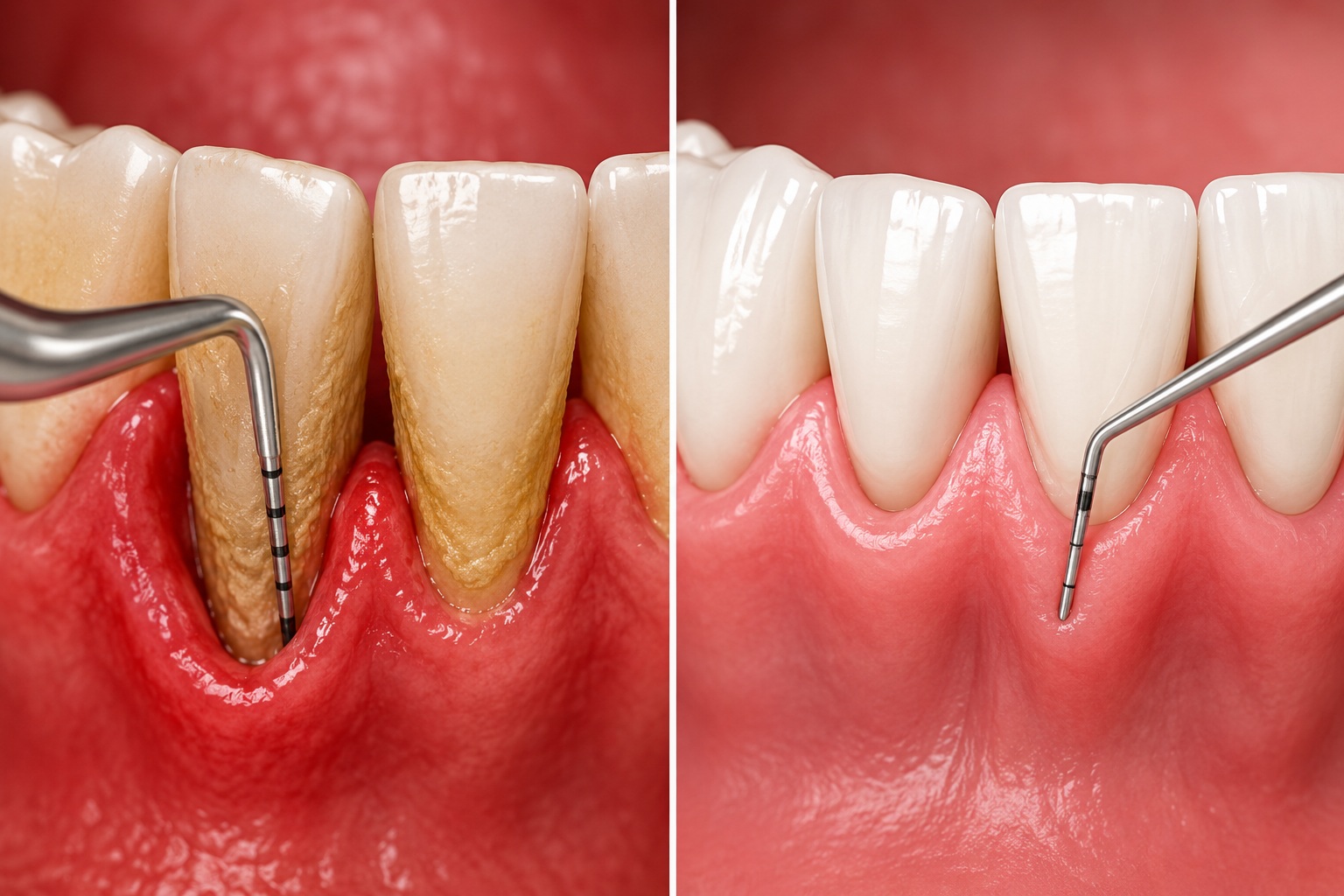
Gingivitis is the earliest stage of gum disease and is often completely reversible with prompt treatment and improved oral hygiene. At this stage, the infection affects only the gums and has not yet caused permanent damage to the supporting bone. Common symptoms include:

  • Red or swollen gums
  • Bleeding during brushing or flossing
  • Tender gum tissue
  • Mild bad breath

Periodontitis

If gingivitis remains untreated, it may progress to periodontitis. Unlike gingivitis, damage caused by periodontitis cannot be fully reversed, making early diagnosis particularly important. As the disease advances:

  • Gums begin to pull away from the teeth
  • Periodontal pockets develop below the gumline
  • Progressive bone loss occurs
  • Teeth may become loose or shift out of position

What Causes Periodontal Disease?

Several systemic and environmental factors can significantly increase the risk of developing gum disease:

  • Poor Oral Hygiene: Inadequate brushing and flossing allow bacterial plaque to accumulate rapidly around the teeth and gums.
  • Smoking and Tobacco Use: Tobacco use significantly increases the risk of periodontitis and severely reduces the body’s natural ability to heal after treatment.
  • Genetic Predisposition: Some individuals are naturally more susceptible to aggressive gum disease due to inherited genetic factors.
  • Underlying Medical Conditions: Illnesses such as diabetes, immune system disorders, or hormonal changes can compromise the body’s defense mechanisms and worsen gum health.
  • Teeth Grinding (Bruxism): Excessive clenching or grinding places extreme mechanical stress on already weakened supporting structures, accelerating bone loss.

Common Signs of Periodontal Disease

Many patients do not experience pain during the early stages of gum disease, which is why regular dental examinations are so important. Warning signs may include:

  • Bleeding gums during brushing or flossing
  • Persistent bad breath or a lingering bad taste
  • Red, swollen, or tender gums
  • Gum recession (teeth appearing “longer”)
  • Sensitive teeth or discomfort while chewing
  • Loose teeth or new spaces developing between teeth
  • Changes in how your teeth fit together when you bite

Any of these symptoms should be professionally evaluated by a dentist as soon as possible.

Why Early Treatment Matters

Periodontal disease does not simply affect the mouth. As the condition progresses, it can lead to permanent structural damage that becomes increasingly difficult to manage. Potential consequences include progressive bone loss, tooth mobility, extensive gum recession, and a significantly higher risk of tooth loss. Early intervention can help stabilise the disease, preserve existing teeth, and prevent the need for complex restorative work later.

What Is Specialist Periodontal Treatment?

Specialist periodontal treatment focuses on diagnosing, treating, and managing advanced gum disease and conditions affecting the supporting structures of the teeth.

A periodontist has extensive, advanced training in:

  • Advanced gum disease management
  • Bone preservation and regenerative procedures
  • Soft tissue treatments and gum grafting
  • Dental implant-related gum care
  • Managing highly complex periodontal cases

Patients with moderate to severe periodontal disease often benefit from a specialist assessment and a tailored, ongoing management plan.

How Specialist Treatment Can Help

Comprehensive Periodontal Assessment

Treatment begins with a detailed evaluation of gum health. This includes measuring periodontal pocket depths, assessing gum recession, evaluating tooth mobility, and performing a full bone level analysis using digital imaging and X-rays.

Deep Cleaning Procedures (Scaling and Root Planing)

One of the most effective treatments for periodontitis is a thorough deep clean. This procedure involves removing plaque and tartar from deep beneath the gumline, cleaning infected root surfaces, and reducing bacterial accumulation to promote gum healing and tissue reattachment.

Periodontal Maintenance Therapy

Because periodontal disease is a chronic condition, ongoing maintenance is essential. Regular maintenance appointments help monitor disease activity, remove stubborn bacterial deposits, prevent recurrence, and protect remaining bone support.

Regenerative Procedures & Gum Grafting

In some situations, advanced treatments such as bone grafting or guided tissue regeneration can help restore lost supporting tissues around the teeth. For patients experiencing severe gum recession, gum grafting can protect exposed tooth roots, reduce sensitivity, and improve the overall aesthetic appearance of the smile.

How One Weybridge Patient Protected Her Smile

A patient from Weybridge recently attended Oatlands Dental Lounge after noticing bleeding gums and increasing tooth sensitivity. She assumed the symptoms were simply caused by brushing too vigorously and delayed seeking professional advice.

During a comprehensive periodontal assessment, significant gum inflammation and early bone loss were identified. Following specialist periodontal treatment and ongoing maintenance care, the disease was successfully stabilised before tooth loss occurred. Her experience highlights how recognising symptoms early and seeking professional treatment can help preserve natural teeth and prevent more extensive intervention later.

Can Periodontal Disease Be Cured?

While advanced periodontitis cannot always be completely cured, it can often be successfully controlled and managed. Long-term success depends heavily on professional specialist treatment, excellent daily oral hygiene, regular maintenance appointments, and managing contributing risk factors like smoking. With appropriate care, many patients maintain healthy, functional natural teeth for life.

How to Reduce Your Risk of Gum Disease

Preventive care remains one of the most effective ways to protect your gum health.

Healthy Daily Habits

  • Brush twice daily with a fluoride toothpaste and clean between your teeth every day using interdental brushes or floss.
  • Attend regular dental examinations to catch early signs of inflammation.
  • Schedule professional dental cleans to remove hardened tartar.
  • Avoid tobacco products and maintain a balanced diet.

Why Professional Gum Care Matters

Because periodontal disease often develops gradually and without obvious pain, many patients are unaware of the extent of damage occurring beneath the gums. Professional assessment allows early detection and intervention before significant bone loss or tooth mobility develops.

At Oatlands Dental Lounge, patients receive personalised periodontal care focused on preserving gum health, protecting and supporting bone, and maintaining natural teeth whenever possible. To safeguard the foundation of your smile, you can easily book a routine dental check-up online to monitor your gum health. For advanced or persistent symptoms, exploring our specialist periodontal treatments can help you get chronic inflammation under control. If you have concerns about existing tooth instability or require a broader assessment, please contact our dental practice to schedule an evaluation with our clinical team.

Protecting Your Gums for Long-Term Oral Health

Healthy gums are the foundation of a healthy smile. Recognising the early signs of periodontal disease and seeking professional care promptly can help prevent permanent damage, preserve natural teeth, and support long-term oral health. Whether you are experiencing bleeding gums, gum recession, or more advanced periodontal concerns, specialist treatment can provide the care needed to manage the condition effectively and confidently.

To discover more about our full range of general, cosmetic, and preventive services, feel free to visit the primary Oatlands Dental Lounge website.

Quick FAQs

Q: What is periodontal disease?

A: Periodontal disease is a chronic bacterial infection affecting the gums and supporting bone structures around the teeth, which can lead to tooth loss if left untreated.

Q: What are the first signs of gum disease?

A: Early symptoms often include bleeding gums during brushing, redness, swelling, tenderness, and persistent bad breath.

Q: Can periodontal disease cause tooth loss?

A: Yes. Advanced periodontal disease destroys the supporting bone and tissue structure, eventually causing teeth to loosen and fall out.

Q: Is periodontal treatment painful?

A: Most periodontal procedures are performed using local anaesthetic to ensure complete patient comfort throughout the treatment.

Q: Can gum disease return after treatment?

A: Yes. Because it is a chronic condition, ongoing maintenance and excellent home oral hygiene are required to prevent bacterial plaque from accumulating again.

Back to Blog

Get in touch

Oatlands Dental Lounge - Logo
  • Napier House
  • 62 - 64 Bridge Street
  • Walton-on-Thames (Near Weybridge)
  • KT12 1AP