Google Rating
4.9
Google Rating
Oatlands Dental Lounge - Logo
instagram icon2 facebook icon1
  • Napier House
  • 62 - 64 Bridge Street
  • Walton-on-Thames (Near Weybridge)
  • KT12 1AP
I would like to:
Contact Us
blog inner thumb

26/06/2026

Single Tooth Implant vs Multiple Implants: Which Treatment Do You Need?

Missing teeth can affect far more than the appearance of your smile. Gaps in your teeth may impact chewing, speech, confidence, and even the long-term health of your jawbone. Fortunately, dental implants offer one of the most reliable and natural-looking solutions for replacing missing teeth. At Oatlands Dental Lounge, patients often ask whether they need a single tooth implant or multiple dental implants to restore their smile effectively.

The answer depends on several factors, including the number of missing teeth, their location, the condition of the surrounding bone, and your overall oral health. Understanding the differences between these treatment options can help you make an informed decision about your smile restoration journey.

What Are Dental Implants?

Dental implants are artificial tooth roots, usually made from titanium, that are placed into the jawbone to support replacement teeth. Once the implant integrates with the bone through a process called osseointegration, it provides a stable foundation for:

  • Dental crowns
  • Dental bridges
  • Implant-supported dentures

Because implants replace the tooth root as well as the visible tooth, they help maintain bone structure and provide excellent long-term stability.

When Is a Single Tooth Implant Recommended?

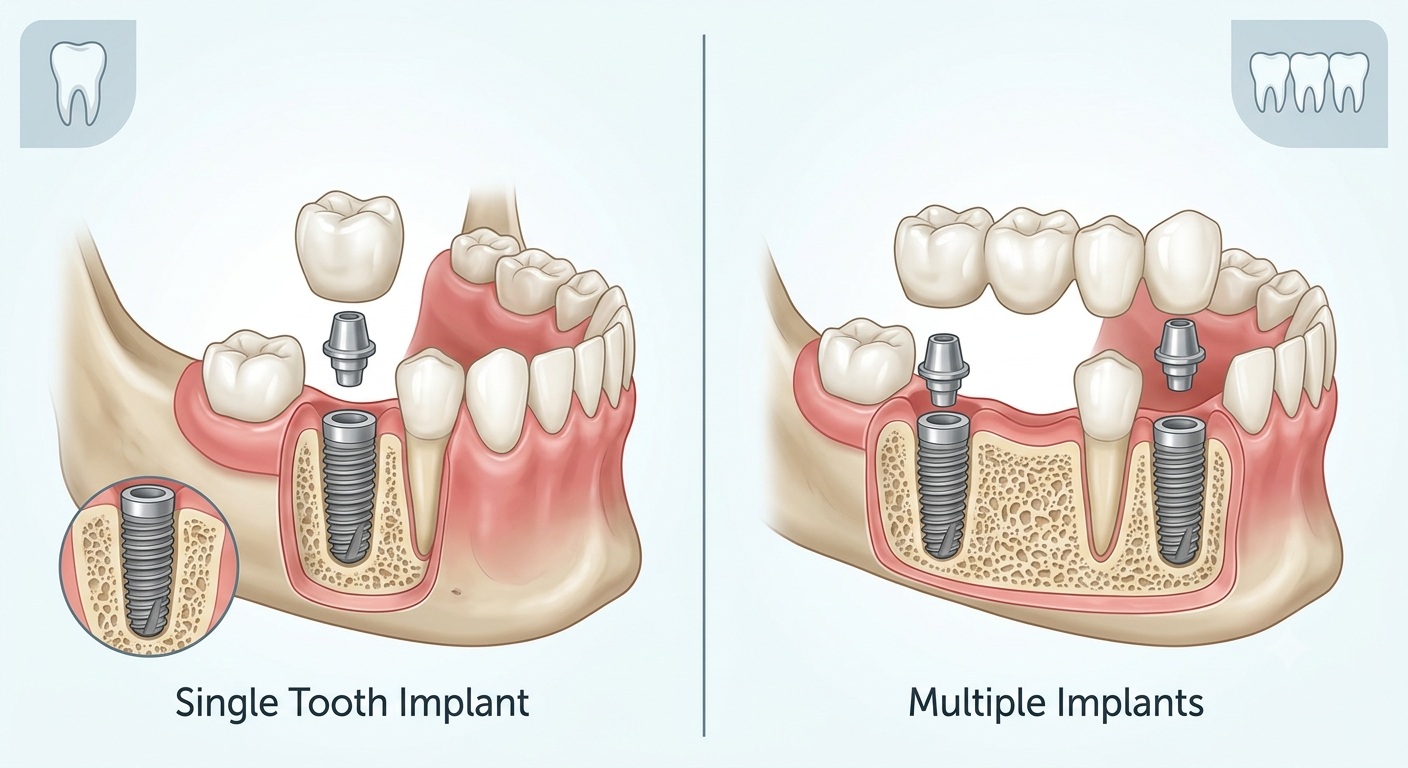
A single tooth implant is typically used when one tooth is missing and the teeth on either side remain healthy. The treatment generally consists of one dental implant and one custom-made dental crown. The implant is placed into the jawbone and, after healing, a crown is attached to restore the appearance and function of the missing tooth.

Benefits of a Single Tooth Implant

  • Preserves Adjacent Teeth: Unlike traditional dental bridges, a single implant does not require neighbouring teeth to be altered or prepared.
  • Natural Appearance: The implant-supported crown is designed to blend seamlessly with surrounding teeth.
  • Strong Chewing Function: A single implant can provide stability and biting strength similar to a natural tooth.
  • Helps Prevent Bone Loss: By replacing the tooth root, the implant stimulates the jawbone and helps reduce bone deterioration in the affected area.

Common Situations for Single Tooth Implants

Single implants are often recommended when a tooth has been lost due to trauma, a severely damaged tooth requires extraction, a tooth cannot be restored with other treatments, or there is sufficient bone support for implant placement.

When Are Multiple Dental Implants Recommended?

Multiple dental implants may be used when several teeth are missing in different areas of the mouth or when larger gaps require replacement. Rather than placing an implant for every missing tooth, strategically positioned implants can often support multiple replacement teeth. Treatment options may include several individual implants with crowns, implant-supported bridges, or full-arch implant restorations.

Replacing Several Missing Teeth With Implant-Supported Bridges

When multiple neighbouring teeth are missing, it is not always necessary to place an implant for every tooth. For example, two implants may support a bridge replacing three or four missing teeth, or several implants can support larger restorative solutions. This approach may reduce surgical procedures, treatment complexity, and overall treatment costs while still providing excellent function and aesthetics.

Full-Arch Implant Solutions

For patients missing most or all teeth in an arch, multiple implants can support a complete set of replacement teeth. These advanced treatments offer improved stability compared to removable dentures, better chewing ability, enhanced comfort, increased confidence, and long-term bone preservation. Implant-supported full-arch restorations have become a popular option for patients seeking a more permanent solution to extensive tooth loss.

Single Tooth Implant vs Multiple Implants: Key Differences

  • Number of Missing Teeth: The most obvious factor is how many teeth need replacing. A single tooth implant replaces one missing tooth using one implant and one crown, whereas multiple implants replace several missing teeth and may involve multiple implants, bridges, or full-arch restorations.
  • Treatment Planning: Single implant treatment is generally more straightforward when adequate bone support is present. Multiple implant cases often require more comprehensive planning, including detailed bone assessments, bite analysis, digital treatment planning, and evaluation of overall oral health.
  • Cost Considerations: Treatment costs vary depending on the number of implants required, restoration type, bone grafting requirements, and treatment complexity. Although multiple implants may involve a larger initial investment, they often provide exceptional long-term value and durability.
  • Maintenance Requirements: Both treatment options require excellent oral hygiene, regular dental examinations, and professional maintenance visits. Proper care is essential for long-term implant success.

Factors Dentists Consider When Recommending Treatment

At Oatlands Dental Lounge, implant recommendations are based on a comprehensive assessment rather than simply the number of missing teeth. Factors evaluated include:

  • Number and location of missing teeth
  • Jawbone quantity and quality
  • Gum health and bite alignment
  • Existing dental restorations
  • Medical history and long-term treatment goals

This personalised approach helps ensure predictable and successful outcomes.

How One Weybridge Patient Restored Her Smile

A patient from Weybridge visited Oatlands Dental Lounge after losing three adjacent teeth due to previous dental complications. She initially assumed she would require three separate implants to replace the missing teeth.

Following detailed imaging and treatment planning, the dental team recommended two strategically placed implants supporting a custom implant bridge. This approach restored her smile, improved chewing function, and reduced the number of implants required while still achieving a highly aesthetic and stable result. Her experience highlights how implant treatment can often be tailored to provide effective and efficient solutions for individual circumstances.

What Happens During a Dental Implant Consultation?

Every implant journey begins with a comprehensive evaluation, which may include:

  • Full dental examination and digital X-rays
  • 3D imaging scans and assessment of bone levels
  • Gum health evaluation and discussion of treatment goals

Based on these findings, a personalised treatment plan is created to determine whether a single implant, multiple implants, or another implant-supported restoration is most appropriate.

Benefits of Choosing Dental Implants

Whether replacing one tooth or several, dental implants offer significant advantages:

  • Long-Term Stability: Implants are designed to function as permanent tooth replacements with proper care.
  • Natural Appearance: Custom restorations are crafted to closely match natural teeth.
  • Improved Function: Implants help restore normal chewing, speaking, and daily comfort.
  • Bone Preservation: Unlike traditional tooth replacement options, implants help maintain jawbone density by replacing the tooth root.
  • Enhanced Confidence: Patients often feel more comfortable smiling, eating, and speaking after implant treatment.

Caring for Dental Implants

Maintaining implant health requires ongoing care and commitment.

Daily Oral Hygiene

Brush twice daily, clean between teeth and implants, and use recommended oral hygiene aids.

Professional Maintenance

Attend regular dental check-ups, schedule professional cleans, and monitor gum health around implants. Consistent maintenance helps protect both the implants and the surrounding tissues.

Why Professional Implant Assessment Matters

Choosing between a single tooth implant and multiple implants is not simply a matter of counting missing teeth. Every patient presents unique anatomical, functional, and aesthetic considerations that influence treatment planning. A thorough professional assessment helps determine the most effective and predictable solution for long-term oral health.

At Oatlands Dental Lounge, patients receive personalised implant treatment plans designed to restore appearance, function, and confidence while preserving healthy bone and surrounding structures. If you are ready to begin your smile restoration journey, you can explore our comprehensive dental implant solutions to find the right path forward. For custom crown work or smaller gaps, learn more about our single tooth implant options. To schedule your comprehensive assessment and discuss your eligibility, please contact our Weybridge dental clinic to speak with our clinical team.

Finding the Right Implant Solution for Your Smile

Whether you are missing one tooth or several, dental implants can provide a stable, natural-looking solution that restores both function and confidence. Understanding the differences between single tooth implants and multiple implant restorations can help you explore the treatment option best suited to your needs. With personalised planning and expert care, modern implant dentistry can help rebuild your smile and support long-term oral health.

To discover more about our full range of general, cosmetic, and advanced restorative treatments, feel free to Contact the Oatlands Dental Lounge.

Quick FAQs

Q: Do I need one implant for every missing tooth?

A: Not necessarily. In many cases, strategically placed implants can support bridges that replace multiple missing teeth without requiring an implant for each tooth.

Q: Is a single dental implant better than a bridge?

A: A single implant often preserves neighbouring teeth and helps maintain bone health because it replaces the tooth root as well as the visible tooth.

Q: Can multiple implants replace all my teeth?

A: Yes. Multiple implants can support full-arch restorations that replace an entire upper or lower set of teeth.

Q: How long do dental implants last?

A: With proper care and regular dental maintenance, dental implants can last for many years and often decades.

Q: Am I suitable for dental implants?

A: Suitability depends on factors such as bone levels, gum health, medical history, and overall oral condition. A consultation is required to determine eligibility.

Back to Blog

Get in touch

Oatlands Dental Lounge - Logo
  • Napier House
  • 62 - 64 Bridge Street
  • Walton-on-Thames (Near Weybridge)
  • KT12 1AP